Samurai names carry a powerful legacy shaped by honor, loyalty, courage, and centuries of Japanese history. From legendary warriors who served powerful daimyō to fictional heroes inspired by bushidō, these names reflect strength, discipline, and deep cultural meaning.
Each samurai name often combines poetic elements of nature, virtue, and ancestry, making them more than just identifiers—they are stories of bravery, wisdom, and tradition passed down through generations.
Why Samurai Names Are More Than Just Words
A samurai’s name wasn’t merely an identifier—it was a reflection of their soul, values, and destiny. Every name carried deep meaning, often symbolizing traits like honor, valor, or wisdom that defined the warrior’s path. These names served as lifelong reminders of duty and pride, linking individuals to their lineage, their lords, and the sacred code of Bushido.
Even today, samurai names resonate beyond history, representing timeless ideals of strength, integrity, and the pursuit of excellence.
Best Fantasy Samurai Names
- Raiden (雷電) – “God of thunder and lightning”; symbolizes power and fury
- Takeshi (武) – “Fierce warrior”; represents bravery and unyielding strength
- Hikari (光) – “Light”; signifies purity and hope amid battle
- Kenshiro (拳四郎) – “Fist of the fourth son”; linked with righteous warriors
- Yamato (大和) – “Great harmony”; ancient poetic name for Japan
- Asahi (朝日) – “Morning sun”; symbolizes new beginnings and courage
- Renjiro (蓮次郎) – “Lotus second son”; signifies rebirth and enlightenment
- Arashi (嵐) – “Storm”; represents unstoppable power and intensity
- Sakurao (桜王) – “Cherry blossom king”; reflects fleeting beauty and nobility
- Hirotaka (寛隆) – “Generous and noble”; represents honor and leadership
- Kaien (海炎) – “Ocean flame”; symbolizes duality—calm yet destructive
- Tsubasa (翼) – “Wings”; signifies freedom and spirit
- Daigo (醍醐) – “Ultimate enlightenment”; represents inner strength
- Masaru (勝) – “Victory”; denotes a triumphant warrior
- Akihiko (明彦) – “Bright prince”; noble and wise samurai archetype
- Ryuunosuke (竜之介) – “Child of the dragon”; symbolizes might and wisdom
- Hayate (疾風) – “Swift wind”; reflects agility and speed in combat
- Kaito (海翔) – “Ocean flight”; represents freedom and vast spirit
- Naotaka (直隆) – “Honest and noble”; signifies moral purity
- Jinsei (人生) – “Life”; a philosophical warrior who values existence
Cool & Edgy Samurai Names
- Kuroda (黒田) – “Black field”; symbolizes darkness and mystery
- Ranmaru (蘭丸) – “Orchid circle”; famous for youthful loyalty
- Zenkai (善戒) – “Virtuous oath”; signifies a warrior bound by moral code
- Akuma (悪魔) – “Demon”; for dark, feared warriors
- Shirogane (銀) – “Silver”; denotes elegance and cold resolve
- Kazan (火山) – “Volcano”; fiery temperament and explosive power
- Rokuro (六郎) – “Sixth son”; often used for calm yet fierce fighters
- Hozumi (穂積) – “Ear of grain”; symbolizes patience and growth
- Makoto (誠) – “Sincerity”; unbreakable moral resolve
- Guren (紅蓮) – “Crimson lotus”; fiery and untamed warrior spirit
- Satsuo (殺男) – “Killer man”; ruthless yet skilled fighter
- Yoru (夜) – “Night”; silent and deadly like darkness
- Kagehisa (影久) – “Eternal shadow”; a master of stealth
- Reiji (怜司) – “Wise ruler”; cool-headed strategist
- Oniyama (鬼山) – “Demon mountain”; symbolizes power and fearlessness
- Toraichi (虎一) – “Tiger one”; ferocious and bold
- Rikka (烈火) – “Raging fire”; represents raw, untamed strength
- Kuroshi (黒死) – “Black death”; feared warrior of legends
- Tenshin (天心) – “Heavenly heart”; calm yet unstoppable
- Ryouken (猟犬) – “Hunting dog”; sharp, loyal, and relentless
Trendy & Catchy Samurai Names
- Haruto (陽翔) – “Sun flight”; bright and popular modern name
- Souta (颯太) – “Swift and strong”; energetic and cool
- Riku (陸) – “Land”; grounded and dependable warrior
- Airi (愛梨) – “Love and truth”; modern feminine samurai name
- Itsuki (樹) – “Tree”; signifies stability and growth
- Takumi (匠) – “Master craftsman”; skilled and intelligent fighter
- Ayato (綾翔) – “Elegant flight”; graceful yet fierce
- Miyako (都) – “Capital city”; symbolizes elegance and leadership
- Ren (蓮) – “Lotus”; simple yet symbolic of peace and renewal
- Naomi (直美) – “Honest beauty”; calm yet powerful
- Reina (怜奈) – “Wise and graceful”; modern feminine samurai aura
- Shion (紫苑) – “Aster flower”; symbolizes remembrance and resilience
- Daiki (大輝) – “Great radiance”; confident and heroic
- Yuzuki (柚月) – “Gentle moon”; beautiful and strong feminine name
- Arata (新) – “New”; symbolizes rebirth and change
- Rin (凛) – “Dignified”; short, elegant, and fierce
- Haru (陽) – “Sunlight”; bright and cheerful warrior
- Mei (芽依) – “Sprouting blessing”; soft yet strong spirit
- Sora (空) – “Sky”; limitless and free
- Kai (海) – “Ocean”; depth and calm power
Creative & Unique Samurai Names
- Tsukikage (月影) – “Moon shadow”; mysterious and poetic
- Kazenari (風成) – “Born of the wind”; symbolizes freedom
- Enra (煙羅) – “Spirit of smoke”; elusive and powerful
- Hoshizora (星空) – “Starry sky”; dreamer warrior
- Kurogane (鉄) – “Iron”; symbolizes resilience and strength
- Aokami (青神) – “Blue god/wolf”; noble and divine
- Chikara (力) – “Power”; embodiment of raw might
- Shizukane (静鐘) – “Silent bell”; calm but impactful
- Renshou (蓮翔) – “Lotus flight”; balanced and spiritual
- Mikazuki (三日月) – “Crescent moon”; graceful and sharp
- Kurohana (黒花) – “Black flower”; beauty with danger
- Hinote (火の手) – “Flame”; symbolizes life and destruction
- Tensei (天星) – “Heavenly star”; destiny-driven warrior
- Kumogiri (雲切) – “Cloud cutter”; swift and transcendent
- Suiren (睡蓮) – “Water lily”; calm strength and inner peace
- Ryoujin (竜刃) – “Dragon blade”; mythic warrior title
- Nozomi (望) – “Hope”; symbolizes faith and perseverance
- Akikaze (秋風) – “Autumn wind”; elegant yet fleeting
- Yamabiko (山彦) – “Echo of the mountain”; spiritual guardian
- Kaoru (薫) – “Fragrance”; unassuming yet powerful presence
Funny & Quirky Samurai Names
- Wasabiro (山葵郎) – “Wasabi man”; fiery temper and spicy humor
- Onigiri (おにぎり) – “Rice ball”; loyal to his stomach before the sword
- Sushiemon (寿司衛門) – “Protector of sushi”; defender of deliciousness
- Nekoichi (猫一) – “Number one cat”; agile, lazy, and adored
- Takozuna (蛸綱) – “Octopus rope”; slippery and unpredictable fighter
- Pikajiro (光次郎) – “Son of lightning”; inspired by pop culture
- Bakaemon (馬鹿衛門) – “Foolish guardian”; brave but clumsy
- Ramenmaru (拉麺丸) – “Ramen boy”; fueled by noodles and spirit
- Sumotaro (相撲太郎) – “Wrestler boy”; samurai who dreams of sumo
- Tempurao (天ぷ羅王) – “King of Tempura”; crunchy warrior of the kitchen
- Yawnatsu (欠伸夏) – “Summer yawn”; lazy swordsman with sleepy charm
- Kawauso (川獺) – “Otter spirit”; playful and mischievous fighter
- Sakehiro (酒広) – “Wide sake”; always drunk but surprisingly wise
- Gohanji (ご飯次) – “Second rice”; humble yet dependable companion
- Wakarimashita (分かりました) – “I understand”; overly agreeable samurai
- Ninjabaka (忍者馬鹿) – “Ninja fool”; wannabe ninja samurai
- Tofuhiko (豆腐彦) – “Tofu prince”; soft-hearted yet pure
- Okashiro (お菓子郎) – “Sweet boy”; loves candy more than combat
- Bananae (バナナ衛) – “Banana guard”; comical but quick
- Sarumaru (猿丸) – “Little monkey”; cheeky and clever trickster
Famous Samurai Last Names (Family Names)
- Takeda (武田) – “Brave warrior field”; famous clan from Kai Province
- Oda (織田) – “Rice paddy weaver”; clan of Oda Nobunaga
- Tokugawa (徳川) – “River of virtue”; ruling shogunate family
- Minamoto (源) – “Origin”; one of Japan’s four great clans
- Fujiwara (藤原) – “Wisteria plain”; noble family of Heian era
- Shimazu (島津) – “Island haven”; dominant family from Kyushu
- Mori (毛利) – “Forest”; symbolizing strength and growth
- Akechi (明智) – “Bright wisdom”; linked with tactician Akechi Mitsuhide
- Honda (本多) – “Root field”; loyal retainers of Tokugawa
- Date (伊達) – “Elegant and bold”; famous for Date Masamune
- Sanada (真田) – “True field”; heroic clan from Sengoku era
- Hosokawa (細川) – “Narrow river”; known for loyalty and artistry
- Chosokabe (長宗我部) – “Long religion clan”; fierce warriors of Shikoku
- Uesugi (上杉) – “Upper cedar”; rival of Takeda in Kanto
- Saito (斎藤) – “Pure wisteria”; noble family with samurai roots
- Hattori (服部) – “Clothing weaver”; known for ninja-samurai Hattori Hanzo
- Imagawa (今川) – “Now river”; powerful clan of Suruga
- Asakura (朝倉) – “Morning storehouse”; respected feudal clan
- Hojo (北条) – “Northern castle”; shogunate regents during Kamakura
- Nagao (長尾) – “Long tail”; ancestral family of Uesugi Kenshin
Samurai Anime Names
- Kenshin Himura (剣心) – Rurouni Kenshin – “Sword heart”; wandering swordsman
- Afro Samurai – Afro Samurai – A lone warrior driven by vengeance
- Jin (仁) – Samurai Champloo – “Virtue”; calm and disciplined swordsman
- Mugen (無限) – Samurai Champloo – “Infinite”; wild and free-spirited fighter
- Giyu Tomioka (冨岡義勇) – Demon Slayer – “Righteous courage”; Water Hashira
- Roronoa Zoro (ロロノア・ゾロ) – One Piece – Symbolizes willpower
- Goemon Ishikawa XIII – Lupin III – Descendant of legendary thief-samurai
- Okita Sougo (沖田総悟) – Gintama – “Calm commander”; Shinsengumi hero
- Hijikata Toshirou (土方歳三) – Gintama – Inspired by real vice-commander
- Kyojuro Rengoku (煉獄杏寿郎) – Demon Slayer – “Refined hell”; Flame Hashira
- Sanosuke Sagara (相楽左之助) – Rurouni Kenshin – “Left helper”; loyal fighter
- Ichigo Kurosaki (黒崎一護) – Bleach – “Black cape guardian”
- Byakuya Kuchiki (朽木白哉) – Bleach – “White night tree”; noble captain
- Kenshiro (拳四郎) – Fist of the North Star – “Fist son”
- Inuyasha (犬夜叉) – Inuyasha – “Dog demon”; half-demon warrior
- Aoshi Shinomori (四乃森蒼紫) – Rurouni Kenshin – “Blue violet”
- Sakata Gintoki (坂田銀時) – Gintama – “Silver time”; comical noble samurai
- Kensuke (剣介) – Various anime – “Sword helper”; classic samurai name
- Tengen Uzui (宇髄天元) – Demon Slayer – “Heavenly elegance”; Sound Hashira
- Shinsuke Takasugi (高杉晋助) – Gintama – “High cedar”; fierce rebel
Historical & Legendary Japanese Samurai Names
- Miyamoto Musashi (宮本武蔵) – “Palace origin warrior”; undefeated swordsman
- Oda Nobunaga (織田信長) – “Trust and longevity”; ambitious warlord
- Toyotomi Hideyoshi (豊臣秀吉) – “Abundant excellence”; peasant turned ruler
- Tokugawa Ieyasu (徳川家康) – “Peaceful home of virtue”; shogunate founder
- Takeda Shingen (武田信玄) – “Faithful mystery”; “Tiger of Kai”
- Uesugi Kenshin (上杉謙信) – “Modest truth”; “Dragon of Echigo”
- Date Masamune (伊達政宗) – “Right religion”; one-eyed dragon
- Honda Tadakatsu (本多忠勝) – “Loyal victory”; undefeated general
- Sanada Yukimura (真田幸村) – “Fortunate warrior”; symbol of loyalty
- Hattori Hanzo (服部半蔵) – “Half-hidden”; master samurai and ninja
- Saito Dosan (斎藤道三) – “Pure way three”; the “Viper of Mino”
- Katō Kiyomasa (加藤清正) – “Pure justice”; brave general
- Ishida Mitsunari (石田三成) – “Three achievements”; Battle of Sekigahara leader
- Yagyu Munenori (柳生宗矩) – “Willow faith ruler”; sword style founder
- Kato Yoshiaki (加藤嘉明) – “Excellent brightness”; loyal general
- Shimazu Yoshihiro (島津義弘) – “Righteous prosperity”; feared general
- Asakura Yoshikage (朝倉義景) – “Morning righteousness”; noble feudal lord
- Hosokawa Tadaoki (細川忠興) – “Loyal fortune”; cultured daimyo
- Kusunoki Masashige (楠木正成) – “True governance”; symbol of loyalty
- Akechi Mitsuhide (明智光秀) – “Bright light of wisdom”; tragic betrayer
Traditional & Famous Samurai Names
- Minamoto no Yoshitsune (源 義経) – “Virtuous Success”
- Nobunaga (信長) – “Trust and longevity”; famous warlord
- Kenshin (謙信) – “Modest truth”; after Uesugi Kenshin
- Ieyasu (家康) – “Tranquil home”; Tokugawa founder
- Hideyoshi (秀吉) – “Excellent fortune”; Japan’s unifier
- Tadahiro (忠弘) – “Loyal and prosperous”; samurai virtue
- Masamune (政宗) – “Right religion”; famous swordsmith and daimyo
- Kagemasa (景政) – “Bright justice”; Heian era hero
- Yukimura (幸村) – “Fortunate village”; Sanada clan’s fighter
- Tadayoshi (忠義) – “Loyal righteousness”; devoted retainer
- Hidetaka (英隆) – “Prosperous excellence”; refined warrior
- Toshinori (俊徳) – “Virtuous genius”; wise samurai scholar
- Aritomo (有朋) – “Noble friend”; loyal companion
- Nobutada (信忠) – “Faithful loyalty”; Oda lineage warrior
- Harunobu (春信) – “Spring faith”; symbolizes renewal
- Takakage (隆景) – “Prosperous view”; thoughtful and tactical
- Tadakatsu (忠勝) – “Loyal victory”; famed Tokugawa general
- Moritsugu (守次) – “Protective heir”; defender of lineage
- Naomasa (直政) – “Honest governance”; Red Devil general
- Shingen (信玄) – “Faithful mystery”; Takeda clan’s strategist
Male Samurai Names
- Ryohei (良平) – “Good and Peaceful”; calm and dependable
- Takashi (隆) – “Noble, Prosperous”; symbol of high rank
- Noboru (昇) – “To Rise”; ambitious samurai spirit
- Katsuro (勝郎) – “Victorious Son”; triumphant and bold
- Toshiro (俊郎) – “Talented Son”; gifted and smart
- Hideaki (秀明) – “Excellent Brightness”; wise and honorable
- Yukio (幸雄) – “Fortunate Hero”; luck and strength
- Ichiro (一郎) – “First Son”; leadership and pride
- Hajime (始) – “Beginning”; symbol of a new start
- Masato (正人) – “Righteous Person”; moral and just
- Kenzou (健三) – “Strong and Steady”; dependable warrior
- Daisuke (大輔) – “Great Helper”; loyal companion
- Shun (俊) – “Talented”; fast and skillful
- Ryota (涼太) – “Cool and Great”; calm strategist
- Hideo (英夫) – “Excellent Man”; admired for wisdom
- Satoshi (智) – “Wise”; thoughtful and intellectual
- Jiro (次郎) – “Second Son”; loyal and supportive
- Kenta (健太) – “Healthy and Strong”; symbol of vitality
- Akio (昭雄) – “Bright Hero”; shining champion
- Hiroto (大翔) – “Great Flight”; freedom and strength
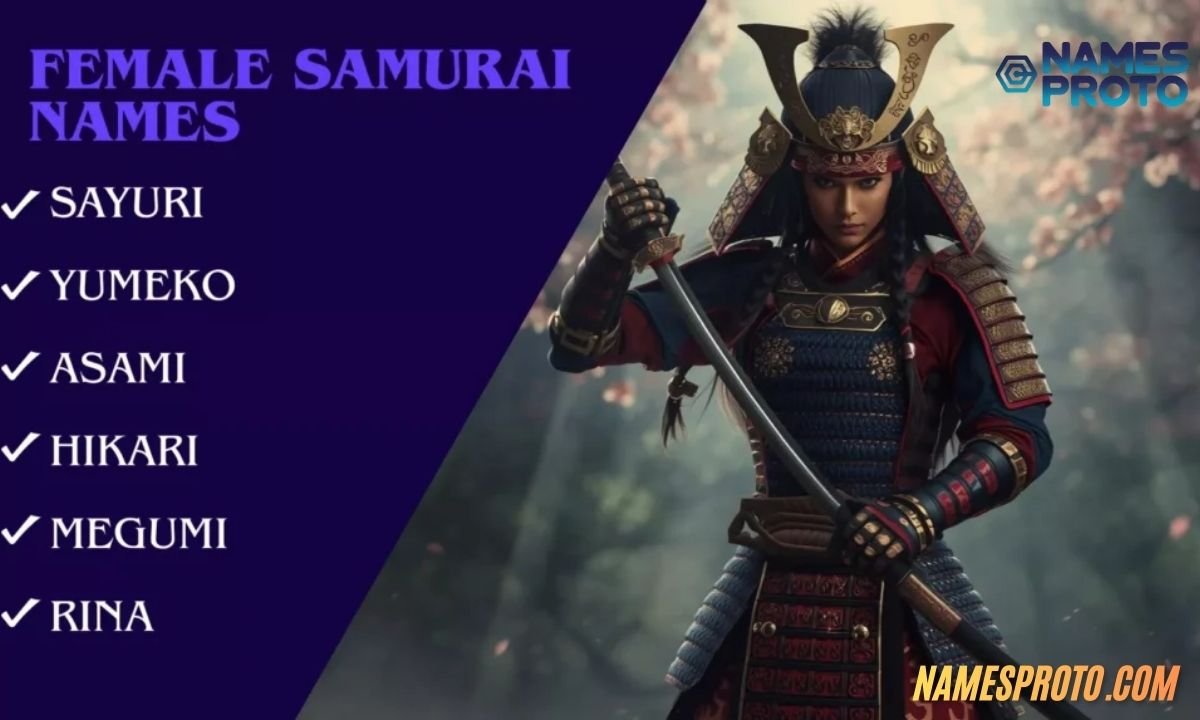
Female Samurai Names
- Aiko (愛子) – “Child of Love”; gentle yet strong-hearted
- Chiyo (千代) – “Eternal Generation”; lasting legacy
- Hana (花) – “Flower”; grace and beauty in strength
- Keiko (恵子) – “Blessed Child”; virtuous and kind
- Miyu (美優) – “Beautiful Gentleness”; balanced spirit
- Ayaka (彩花) – “Colorful Flower”; creativity and elegance
- Sakura (桜) – “Cherry Blossom”; fleeting yet beautiful life
- Tomoe (巴) – “Circle”; inspired by Tomoe Gozen
- Haruka (遥) – “Distant”; far-reaching influence
- Akira (明) – “Bright, Clear”; sharp mind and clarity
- Emiko (笑子) – “Smiling Child”; cheerful and brave
- Kiyomi (清美) – “Pure Beauty”; symbol of purity
- Rina (里奈) – “Village Beauty”; simple yet resilient
- Sayuri (小百合) – “Little Lily”; innocence with hidden strength
- Yumeko (夢子) – “Dream Child”; visionary and determined
- Asami (麻美) – “Morning Beauty”; fresh and radiant
- Hikari (光) – “Light”; beacon of hope and guidance
- Megumi (恵) – “Blessing”; compassionate and noble
- Yuki (雪) – “Snow”; peaceful and pure
- Natsuki (夏希) – “Summer Hope”; warm and optimistic
Unisex Samurai Names
- Makoto (誠) – “Truth”; honesty and virtue
- Nao (直) – “Honest”; straightforward and loyal
- Mika (美香) – “Beautiful Fragrance”; graceful strength
- Tomo (智) – “Wisdom”; intellect and insight
- Kou (光) – “Light”; illumination and justice
- Aki (秋) – “Autumn”; wisdom from experience
- Minori (実り) – “Harvest”; fruitful and steady
- Naru (成) – “To Become”; growth and destiny
- Rei (礼) – “Courtesy”; respect and harmony
- Aoi (葵) – “Hollyhock Flower”; noble and ancient
- Hinata (陽向) – “Facing the Sun”; positivity and courage
- Yori (依) – “Reliance”; trustworthy and steady
- Kyo (京) – “Capital”; elegant and refined
- Michi (道) – “Path”; journey and purpose
- Nao (尚) – “Furthermore”; continuous improvement
- Sumi (澄) – “Clear”; pure intentions
- Yoshi (義) – “Righteous”; just and fair
- Kazue (一恵) – “First Blessing”; fortunate beginning
- Mio (澪) – “Waterway”; flowing and adaptable
- Toki (時) – “Time”; patient and wise
Samurai Nicknames
- The Crimson Blade – for a warrior who never falters
- Silent Wind – for a stealthy and swift fighter
- Iron Shadow – symbolizes impenetrable defense
- Silver Fang – sharp and precise warrior
- Storm Walker – one who thrives in chaos
- Moon Fang – poetic name for a night fighter
- Black Crane – graceful yet deadly
- Fallen Cherry – symbolizes fleeting yet noble life
- The Wolf of Edo – lone yet loyal samurai
- Scar of Honor – one who bears the mark of valor
- Dragon’s Echo – fierce spirit that lingers
- Crimson Sparrow – agile and beautiful in motion
- The Wandering Blade – traveler seeking purpose
- Blinding Dawn – represents justice and clarity
- Whispering Steel – stealth and precision
- The Last Ronin – masterless but proud
- Shadow Flame – burning spirit within darkness
- Moonlight Fang – elegant yet fierce fighter
- Silent Rain – quiet, disciplined, and graceful
- Iron Phoenix – rebirth through battle and honor
Samurai Usernames
- SilentKatana – calm and precise like a blade
- CrimsonRonin – masterless warrior stained by battle
- ShogunSoul – spirit of a true leader
- ZenStrike – balance and precision in every move
- BladeOfEdo – homage to samurai from Edo era
- ShadowKensei – “Sword Saint” hidden in darkness
- BushidoBound – devoted follower of samurai code
- SakuraSteel – blend of beauty and strength
- RoninGhost – wandering soul of a fallen samurai
- DragonOfNippon – powerful protector of Japan
- KyotoBlade – elegant yet deadly warrior
- LoneKatana – solitary fighter with unmatched skill
- TheSilverShogun – symbolizes noble leadership
- MoonlightRonin – poetic warrior under the moon
- TsubaWolf – symbol of protection and loyalty
- SpiritOfMusashi – named after legendary samurai
- CrimsonDaimyo – powerful warlord with fierce heart
- SilentBushido – quiet strength of samurai virtue
- AshenKenshi – “Sword Master” born from ashes
- StormRonin – drifter who fights like thunder
Evil Samurai Names
- Kurojin (黒刃) – “Black Blade”; dark-hearted swordsman
- Onimaru (鬼丸) – “Demon Circle”; cursed spirit warrior
- Yamika (闇火) – “Dark Flame”; burns within shadows
- Retsudo (烈土) – “Fierce Earth”; unrelenting warrior
- Kageura (影裏) – “Hidden Shadow”; unseen and deadly
- Kuragane (暗金) – “Dark Metal”; cold and ruthless
- Makuro (真黒) – “Pure Black”; soul consumed by void
- Noraku (呪落) – “Cursed Descent”; fallen from honor
- Shiryō (死霊) – “Dead Spirit”; ghostly killer
- Yūrei (幽霊) – “Vengeful Ghost”; restless and cold
- Gokudō (極道) – “Extreme Path”; corrupted Bushido
- Kuronami (黒波) – “Black Wave”; unstoppable force
- Dokuzen (毒善) – “Poisoned Virtue”; false righteousness
- Kurai (暗い) – “Dark”; shadowed heart
- Tsukigiri (月斬) – “Moon Slayer”; silent killer
- Ranzou (乱蔵) – “Chaotic Store”; embodies destruction
- Enma (閻魔) – “Lord of Hell”; judge of underworld
- Zankoku (残酷) – “Cruelty”; merciless soul
- Mujō (無常) – “Impermanence”; emotionless destroyer
- Yami (闇) – “Darkness”; embodiment of shadow
Modern & Trending Samurai Names
- Kairo (海朗) – “Sea Light”; modern, strong, spiritual
- Renzo (蓮蔵) – “Lotus Storehouse”; peaceful yet powerful
- Naoya (直也) – “Honest and True”; modern integrity
- Minato (湊) – “Harbor”; refuge and strength
- Rikuya (陸也) – “Land and Harmony”; balance
- Hiroki (弘樹) – “Expansive Tree”; stability and growth
- Asahi (旭) – “Rising Sun”; new dawn, bright energy
- Daigo (大悟) – “Great Enlightenment”; spiritual awakening
- Renya (蓮也) – “Lotus Gentleman”; peace and grace
- Tsubasa (翼) – “Wings”; symbol of freedom
- Kou (煌) – “Radiance”; shining presence
- Rento (蓮斗) – “Lotus Fighter”; peaceful warrior
- Kairi (海里) – “Ocean Village”; vast and grounded
Conclusion
Samurai names stand as timeless symbols of honor, resilience, and unwavering dedication. Each name reflects the spirit of legendary warriors who lived by the code of bushidō, valuing courage, loyalty, and integrity above all else. Exploring these names offers a deeper understanding of Japanese history and culture, where every character and meaning carries a story of strength and purpose.
This list of 310+ Samurai Names serves as a valuable source of inspiration for historians, writers, gamers, and anyone drawn to the mystique of the samurai era. Whether you seek a powerful warrior name, a meaningful Japanese name, or creative ideas for storytelling, these names connect the past with the present, keeping the noble legacy of the samurai alive for generations to come.