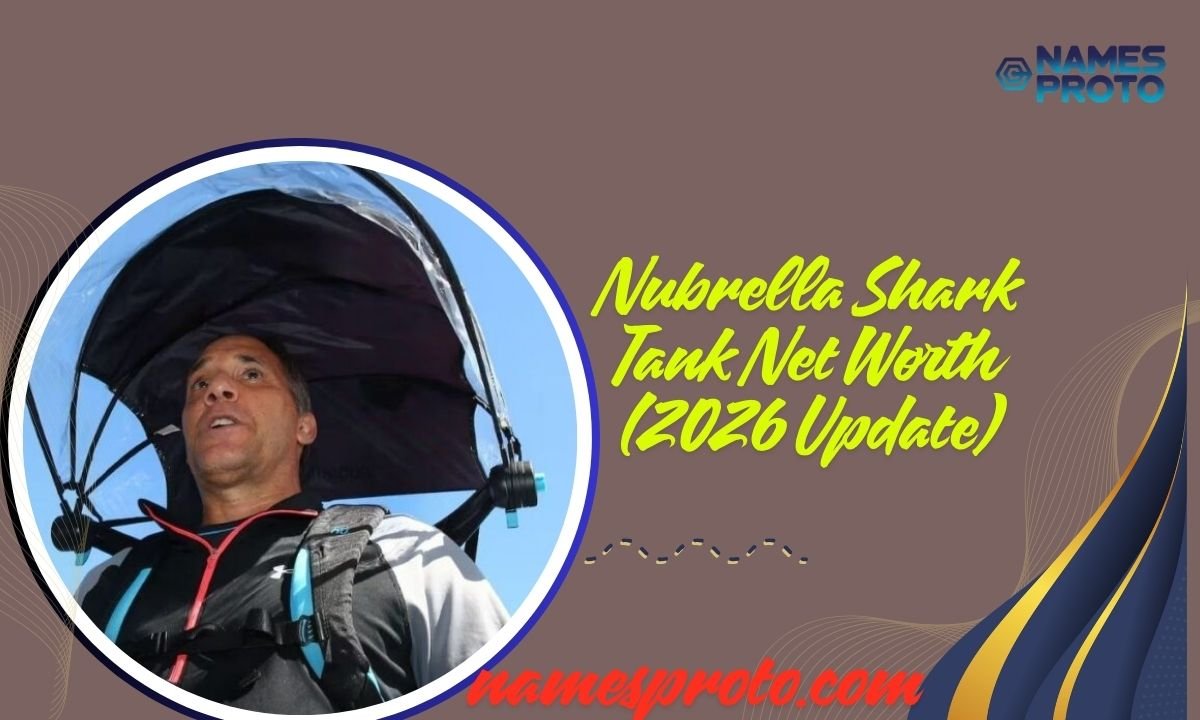
Nubrella is the wearable, hands-free umbrella invention that captured national attention with its appearance on Shark Tank, where founder Alan Kaufman pitched the unique weather-protection concept to the panel of investors. Despite not securing a finalized deal on the show, the brand became a widely discussed example of innovative product design and entrepreneurial grit.
Over the years since its TV debut, Nubrella built a reputation for offering 360-degree rain and wind protection without needing to hold a traditional umbrella, gaining millions of views, global media exposure, and a niche but loyal following.
What Is Nubrella?
Nubrella is a hands-free umbrella. It sits on your shoulders instead of being held in your hand. The design gives full upper-body coverage. You can walk, carry bags, or use your phone while staying completely dry. It targets commuters, outdoor workers, and anyone who needs their hands free in the rain.
The Idea Behind the Nubrella Umbrella
The idea came from a simple observation. Regular umbrellas only cover your head. Your shoulders, bag, and clothes still get wet. The inventor wanted a better solution. He designed a dome-shaped umbrella that wraps around the user more completely. The focus was always on solving a real everyday problem rather than chasing a design trend.
What Makes Nubrella Different
The biggest difference is the hands-free structure. There is no handle to hold. The weight rests on your shoulders through an internal support system. This is useful for commuters, cyclists, delivery workers, and outdoor professionals. However, the unusual appearance made some buyers hesitant. That tension between bold innovation and social comfort shaped the product’s entire journey from concept to market.
Nubrella Shark Tank Pitch
Nubrella appeared on Shark Tank to seek funding. The founder wanted investment to scale manufacturing and expand marketing. He positioned the umbrella as a practical daily tool, not a gimmick. The pitch was creative, well-prepared, and genuinely memorable. It introduced a new way of thinking about rain protection to a national audience.
Which Shark Invested in Nubrella
No Shark invested in Nubrella. Every investor admired the design and the creativity behind it. But doubts surfaced quickly. The Sharks worried whether everyday consumers would feel comfortable wearing such an unconventional product in public. Social acceptance was the sticking point. Without confidence in mass-market adoption, no deal was possible.
Nubrella Shark Tank Deal Details
No deal was finalized on the show. However, the appearance still delivered enormous value. Millions of viewers saw the product in one night. Website traffic spiked dramatically after the episode aired. That exposure acted like a powerful marketing campaign. It allowed the company to test real consumer demand without needing a single dollar from the Sharks.
Valuation During Shark Tank
The founder presented a valuation built on development costs and projected demand. The Sharks challenged this immediately. They wanted hard sales data, not projections. This back-and-forth about valuation revealed a classic startup gap. Inventors value potential. Investors value performance. That difference in perspective became the defining tension of the entire pitch.
Nubrella Shark Tank Update
After the episode aired, Nubrella got a major boost in attention. This is commonly known as the Shark Tank effect. Search traffic surged. Orders came in faster than expected. Social media mentions rose overnight. The brand suddenly had national visibility it could never have purchased on its own budget.
What Happened to Nubrella After Shark Tank
The weeks following the broadcast were hectic. The company worked hard to fulfill a rush of new orders. Manufacturing and logistics were stretched. Customer feedback arrived in large volumes. Over time, sales normalized into a slower and steadier rhythm. The product found a loyal niche audience but never reached mainstream mass adoption.
Business Growth After the Show
Growth after Shark Tank was real but modest. The brand connected with commuters and outdoor workers who genuinely valued hands-free protection. But it never crossed into everyday consumer territory. The unconventional design kept a portion of potential buyers from committing. The company focused on direct online sales and stayed lean to survive long term.
Is Nubrella Still in Business Today
Yes, Nubrella is still in business. It continues to operate as a niche product brand. Sales run through its official website and select online marketplaces. Years after its Shark Tank appearance, the company remains active. That long-term survival is meaningful. Many products from the show disappear within months. Nubrella kept going.
Nubrella Net Worth in 2026
Estimating Nubrella’s net worth requires a grounded, realistic approach. The company is privately owned and does not release financial data. But business size, sales model, and brand equity all point toward a consistent picture. The valuation is modest but legitimate.
| Category | Details |
| Company Status | Still active and operational |
| Business Model | Direct-to-consumer online sales |
| Estimated Valuation (2026) | Low seven-figure range (~$1M–$2M) |
| Main Revenue Source | Product unit sales |
| Retail Presence | Limited — primarily online |
| Shark Tank Deal | No deal secured |
| Founder | Alan Kaufman |
Current Nubrella Company Valuation
In 2026, Nubrella’s estimated company value falls in the low seven-figure range. That likely means somewhere between one and two million dollars. This figure accounts for intellectual property, existing inventory, brand recognition from Shark Tank, and ongoing direct-to-consumer revenue. It does not assume major retail deals or international growth that have not yet happened.
Comparison: Before vs After Shark Tank
Before the show, the valuation was almost entirely built on hope. It reflected what the product might achieve if adopted widely. After the show, the valuation became rooted in real numbers. Actual sales data, customer behavior, and operational costs replaced projections. The result was a lower but far more honest assessment of what the company was truly worth.
Factors Affecting Nubrella’s Net Worth
Several factors keep the valuation conservative. Seasonal demand is one of the biggest. People buy umbrellas when it rains, not year-round. This creates income gaps across the calendar. Manufacturing costs for a custom, non-standard product are also higher than average. And consumer hesitation about wearing an unusual product in public limits the addressable market significantly.
Nubrella Revenue & Income Sources
Nubrella’s revenue model is simple. The company sells its hands-free umbrella directly to customers. There are no licensing deals, subscription services, or secondary products. All income comes from unit sales. This simplicity reduces operational complexity but also caps how fast the business can grow without launching new offerings.
How Nubrella Makes Money
Sales happen through the company’s own website and through third-party online marketplaces. Customers pay full price for the product. There are no large wholesale relationships or discounted bulk partnerships with big retailers. This approach protects profit margins. But it means the business depends heavily on digital marketing and online search traffic to stay visible.
Product Sales & Distribution
Distribution is nearly entirely online. The brand avoids large retail store commitments. This keeps financial risk low and removes the pressure of meeting minimum order volumes. The tradeoff is slower growth. Without shelf space in major stores, discovery relies on word-of-mouth, search engine rankings, and social media. Every sale comes from someone who actively sought the product out.
Estimated Annual Revenue
Exact annual revenue figures are not publicly available. Based on business size and model, estimates point to a low six-figure annual revenue. Sales likely climb during rainy seasons in spring and autumn. They taper off during dry summer and winter months. This uneven pattern keeps the business operational but limits any aggressive plans for expansion or new hires.
Nubrella Founder Net Worth
The founder’s personal wealth is directly linked to Nubrella’s business performance. There are no separate celebrity deals, brand partnerships, or side ventures to boost his personal finances. His net worth is the net worth of a dedicated small business owner who built something unique and kept it alive through persistence.
Who Is the Founder of Nubrella
Alan Kaufman founded Nubrella. He is an inventor with a background in practical problem-solving. He is not a media personality or a celebrity entrepreneur. He keeps a very low public profile. Almost all public recognition he has received has come from the invention itself, not from personal brand-building or marketing campaigns.
Founder Age & Early Life
Specific details about Kaufman’s age and early life are not widely documented. What is clear is that he comes from a hands-on, observational background. He learned by watching and experimenting rather than by following a formal entrepreneurial path. That practical mindset shaped every decision in how Nubrella was designed, tested, and eventually brought to market.
Founder Net Worth Breakdown
Kaufman’s net worth is primarily based on his ownership stake in Nubrella. Without major company exits, large funding rounds, or separate business ventures, his personal wealth remains modest. Most estimates place his individual net worth in the low to mid six-figure range. This is the financial reality of a dedicated small business founder who chose sustainability over celebrity.
Career & Success Journey
Alan Kaufman’s career reflects the mindset of a classic inventor. He identified a problem that millions of people face every rainy day. He decided to fix it. That simple starting point drove years of development, refinement, and ultimately national exposure on one of America’s most-watched business programs.
From Idea to Shark Tank
The path to Shark Tank started with observation. Kaufman watched people struggle with regular umbrellas every day. Wet shoulders. Occupied hands. Broken spokes in the wind. He began prototyping a solution. He tested materials, adjusted the fit, and refined the shoulder support system. After multiple rounds of improvement, he was ready to pitch his invention to the world.
Major Business Milestones
Several milestones mark the Nubrella story. The initial product launch proved the design could be manufactured. The Shark Tank appearance gave the brand national credibility. Surviving the post-show sales normalization showed real resilience. And maintaining consistent operations years later demonstrated that the product had genuine, lasting demand. Each step forward required effort and adaptation.
Challenges Faced by Nubrella
Nubrella faced multiple serious challenges. Manufacturing a non-traditional product cost more than standard umbrella production. Convincing consumers to change a deeply habitual behavior was difficult. Seasonal demand created financial unpredictability. And maintaining brand visibility without a large marketing budget required creativity. None of these challenges were fatal. But each one slowed growth and shaped the company’s long-term strategy.
Lifestyle of the Nubrella Founder
Alan Kaufman’s lifestyle matches the practical, focused nature of his business. He does not pursue luxury or media attention. His personal choices reflect the same philosophy as his product: function over flash. He invests in the work, not the image.
House & Real Estate
There is no public information about extravagant real estate holdings. Kaufman appears to live modestly. His housing choices seem aligned with convenience and proximity to his business operations rather than status. This approach allows more resources to flow back into product development and operations rather than personal overhead.
Cars & Luxury Assets
No high-end vehicles or luxury purchases have been publicly linked to Kaufman. His approach to personal assets appears entirely functional. Transportation serves a practical purpose. This philosophy mirrors the core idea behind Nubrella itself: solve the problem practically and avoid unnecessary excess in every part of life.
Overall Lifestyle Overview
Kaufman leads a quiet, grounded life. He avoids media appearances and personal brand promotion. His focus stays on the product and the business. This disciplined, low-profile approach has allowed him to sustain Nubrella for years without the distraction of public attention. It is a lifestyle built entirely around doing the work rather than performing it.
Family & Personal Life
The personal life of Nubrella’s founder remains largely private. Kaufman has made a deliberate choice to separate his personal world from his public business identity. What little is known suggests a grounded, supportive home environment that enabled his focus on building and growing the brand.
Family Background
Specific details about Kaufman’s family background and upbringing are not available publicly. His practical and creative approach to problem-solving suggests an environment that encouraged curiosity and persistence from an early age. Those traits came through clearly in how he developed and refined Nubrella over many years of patient iteration.
Wife, Kids & Relationships
There is no public information about Kaufman’s marital status, children, or personal relationships. He has chosen to keep this part of his life entirely separate from the business. That boundary has served him well. It allows clear focus on operations, product development, and brand management without unnecessary personal exposure or media distraction.
Is Nubrella Worth Investing In Today?
Evaluating Nubrella as a potential investment in 2026 requires honest thinking. The product is innovative and has proven it can survive long term. But the scale is small. The market is niche. Growth potential exists but depends on new strategies that have not yet materialized. Any investor must weigh modest but stable returns against the limited ceiling of the current model.
Market Demand & Brand Potential
Demand is real but stays within a specific audience. Commuters, outdoor professionals, and practical-minded consumers are the core buyers. The Shark Tank appearance still gives the brand earned credibility that money cannot buy. However, mass-market adoption would require either a redesign that improves social acceptance or new product lines that expand the brand’s reach beyond umbrellas.
Future Growth Outlook
The future of Nubrella depends on strategic decisions not yet made. Entering international markets, partnering with outdoor retailers, or launching complementary products could all accelerate growth. Without those moves, the company will likely remain at its current stable but modest level. For investors who understand niche consumer products, Nubrella offers a low-risk, low-reward proposition grounded in a real and lasting invention.
FAQs
How much is Nubrella worth today?
Nubrella’s estimated net worth in 2026 is in the low seven-figure range, approximately $1 million to $2 million, based on brand equity, intellectual property, and ongoing sales.
Did Nubrella succeed after Shark Tank?
Yes, in terms of survival and niche sales. It never achieved mainstream mass-market success but has remained operational and generating steady revenue for years after the show.
Where can you buy Nubrella products?
Nubrella is available on its official website and through select online marketplaces such as Amazon. There is no significant brick-and-mortar retail presence currently.
Who is the founder of Nubrella?
Alan Kaufman founded Nubrella. He is a practical inventor focused on solving everyday problems and keeps a very low public profile outside of his Shark Tank appearance.
Is Nubrella still in business?
Yes. Nubrella continues to operate as a niche consumer brand with consistent online sales and an active product available for purchase today.
What makes Nubrella different from traditional umbrellas?
Nubrella is worn on the shoulders with no handle to hold. It keeps both hands free while providing full upper-body rain coverage, making it ideal for commuters and outdoor workers.
Conclusion
Nubrella is a genuine success story — just not the explosive kind most people expect. Alan Kaufman identified a real problem, built a functional solution, and took it to national television. He walked away without a deal. But he walked away with something far more valuable: exposure, credibility, and proof that the market cared.
The company has survived for years after Shark Tank. It generates steady income from a loyal niche audience. The net worth in 2026 sits in the low seven-figure range. That is modest by startup standards. But it is real, hard-earned, and built entirely without outside investment.